
Germany: THE MEMORY ROUTE – From Munich to Berlin by Bike
History, memory and landscapes of contemporary Germany on two wheels.
10 days – €4900/Person
Summary
A unique journey linking Munich and Berlin, riding through secondary roads, Bavarian forests and historic cycle paths.
A route full of meaning, where every pedal stroke brings us closer to the key sites of Nazism, the Second World War and German reconstruction.
From the origins of the regime in Bavaria to the fall of the Berlin Wall, this experience combines living history, adventure cycling and culture.
Ideal for those seeking a demanding but deeply human and educational route.
Trip Features
-
Duration: 10 days / 9 nights
-
Total distance: approx. 700 km
-
Level: Medium-high (60–90 km daily)
-
Terrain: paved cycle paths, country lanes and compact gravel sections
-
Total elevationgain: approx. 4,000 m
-
Bike type: gravel, touring MTB or e-bike
-
Luggage transport: included (support vehicle)
-
Theme: German history, memory and culture
Historical Context
This route passes through iconic places that marked 20th-century history:
-
Munich, where the Nazi Party emerged and the 25 points of the NSDAP were proclaimed.
-
Dachau, the first concentration camp, a symbol of the regime’s terror.
-
Nuremberg, site of the Nazi party rallies and the subsequent trials.
-
Berlin, capital of the Third Reich and later the epicentre of the Cold War.
Throughout the route we explore in depth how Germany has transformed these places of pain into sites of memory, education and reconciliation.
Detailed Itinerary
Day 1 – Arrival in Munich
Reception, bike setup and briefing.
Gentle urban ride (15 km) through Marienplatz, Hofbräuhaus and Königsplatz.
Welcome dinner and overnight stay.
Day 2 – Munich – Dachau – Ingolstadt (70 km)
Route through the outskirts of Munich to the Dachau concentration camp, guided visit.
Continuing towards the Danube. Arrival in Ingolstadt, a fortified city.
Overnight stay.
Day 3 – Ingolstadt – Nuremberg (85 km)
We follow the Rhine–Main–Danube canal, surrounded by forests and Bavarian villages.
Arrival in Nuremberg, former site of the Nazi party rallies.
Dinner and overnight stay.
Day 4 – Historic Nuremberg (30 km)
Visit to Courtroom 600, the Zeppelin Field and the “Fascination and Terror” museum.
Free afternoon in the medieval old town.
Overnight stay.
Day 5 – Nuremberg – Bayreuth (65 km)
Green landscapes and gentle hills.
Arrival in Bayreuth, city of Wagner and site of Nazi headquarters during the war.
Overnight stay.
Day 6 – Bayreuth – Leipzig (partial train + 60 km bike)
Combined train + bike section through the routes of Saxony.
Arrival in Leipzig, a university city and symbol of civil resistance in East Germany.
Overnight stay.
Day 7 – Leipzig – Wittenberg (70 km)
We follow the Elbe river route (Elberadweg), one of the most beautiful in Europe.
Arrival in Wittenberg, birthplace of Luther’s Reformation.
Overnight stay.
Day 8 – Wittenberg – Berlin (85 km)
Final stage through forests and rural villages.
Triumphant entry into Berlin through the Köpenick district.
Celebration dinner.
Day 9 – Historic Berlin (40 km urban)
Guided route through:
-
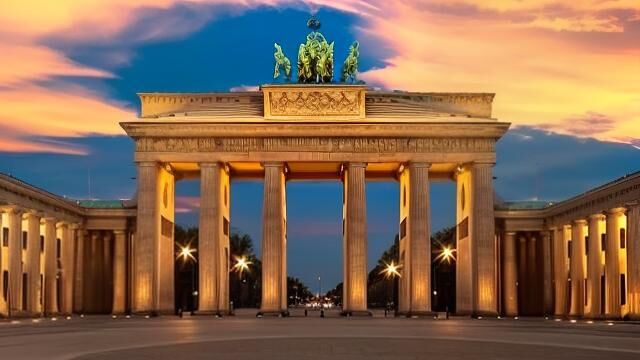
Brandenburg Gate
-
Reichstag
-
Holocaust Memorial
-
East Side Gallery (former Berlin Wall)
-
Checkpoint Charlie
Farewell dinner.
Day 10 – Berlin – End of the Trip
Breakfast and end of services.
Transfer to the airport or free day.
Includes
-
Cycling guide + specialized historical guide
-
Support vehicle with luggage transport
-
9 nights of accommodation in 4-5 star hotels
-
Breakfasts and Lunch
-
Guided visits to Dachau, Nuremberg and Berlin
Not Included
-
International flights
-
Lunches and dinners not mentioned
-
Optional entries or personal expenses
-
Bicycle rental (optional)
Curious Historical Fact
During the war, Germany came to have more than 40,000 concentration camps and subcamps.
Today, the country has made a deep commitment to memory, keeping many of them open as spaces for learning and reflection.
On this trip you do not just pedal: you come to understand how a nation has turned its darkest past into an example of historical responsibility.